
LEGACY CASE STUDY: KATRINA
We recently completed a series of legacy case studies, delving into the long-term impact of PLACED’s early outreach and Academy programmes. These case studies involve participants who engaged with PLACED during the initial outreach efforts and early development of PLACED Academy and have since gone on to be highly successful within the built environment in their own right. We’re proud to have played a small part in their journey. These early outreach and Academy experiences fostered significant engagement and growth, laying the groundwork for the expanded Academy programmes as they exist today.
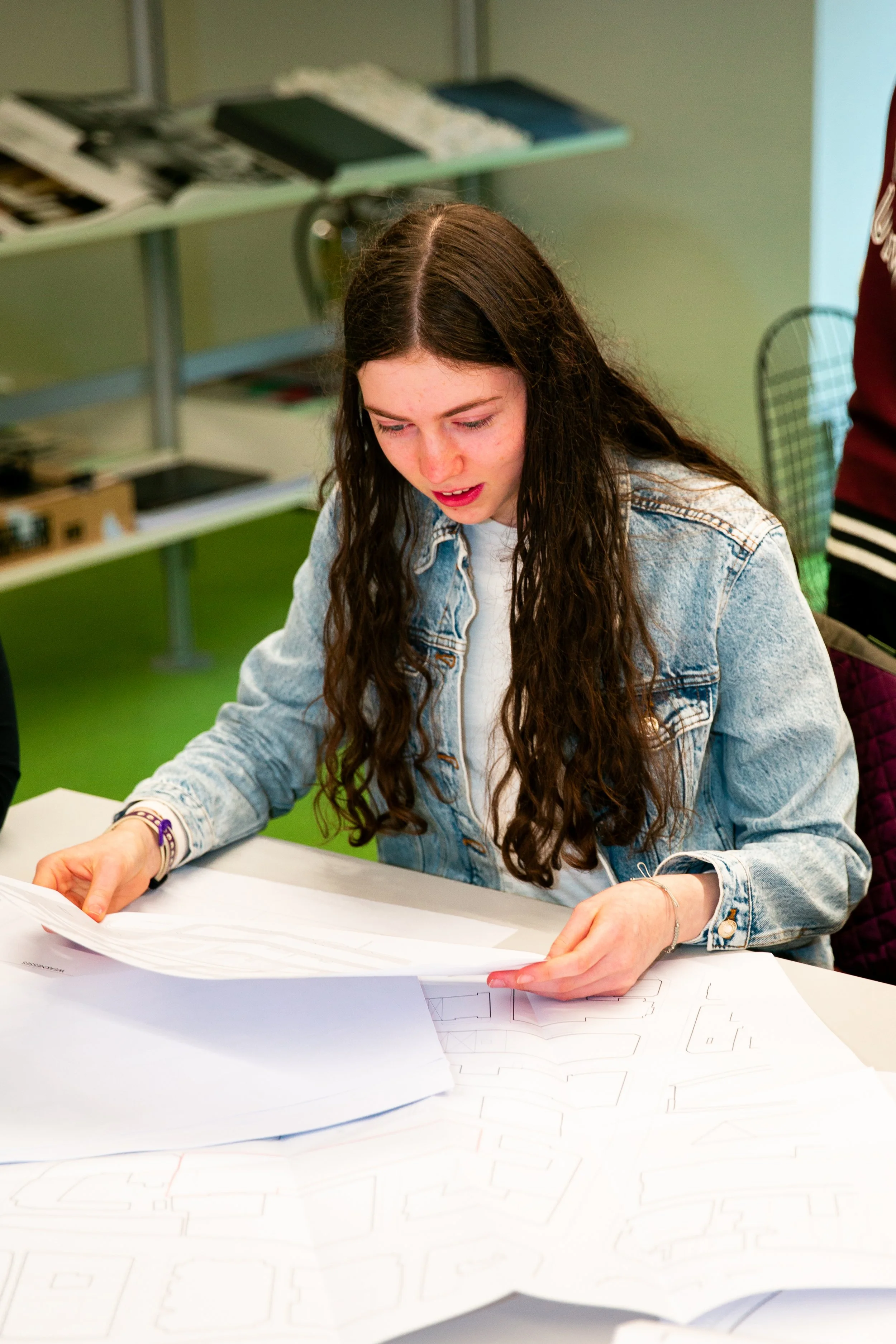
Katrina, PLACED Academy Studio Alumni
How did you first discover PLACED Academy, and what motivated you to apply for the Studio programme?
A teacher at my school told us all about it. I realised I didn't really know anything about the subject and wanted to learn more, so I signed up.
What were your initial expectations when you first started out, and how did it feel stepping into a built environment programme?
I wasn't really sure what to expect. I didn't even know what the built environment really was, but I've certainly developed my confidence since then. For the first session, my parents had to take me, and it was all quite overwhelming, but it quickly became very fun. For the most recent session, I travelled by train to Manchester all by myself.
You've taken part in a real variety of Academy initiatives. Looking back at each of these, what stands out as the most memorable experience or project?
I think the Studio Summer School, because that was back when everything started. That was where I met lots of new friends and started learning more about the built environment. There were lots of fun activities, like one where we got to draw around each other and then talk about what we'd look for in a city. Our picture of 'Farmer Daisy' is still our profile picture for our WhatsApp group chat, so it's memorialised forever.
In what ways did entering the Future Designers competition push your creativity and link back to the Studio programme?
One of my favourite Studio programme sessions was going to the Metropolitan Cathedral and looking around, because there is this big, elevated, empty concrete space that you wouldn't even know was there. We had a go at designing that space and exploring what we'd like to see in the city. That linked quite well to the competition focused on Williamson Square, because it's another big, empty space in the city.
Can you describe your work experience placements? What real-world industry insights did you gain from spending time with professional practices?
I've had two work experience placements. My first experience was with Avison Young. It was really good because it took place right after PLACED; I knew I wanted to work in the built environment, but I wasn't really sure which career specifically because I'd been introduced to so many. The placement was excellent because each day we followed a different role. We looked at legal documents, valuations, and facilities management, and we even got to go around The Spine. It showed me that the construction of a building isn't the end of the process—it's actually the start of the building being used. Seeing how it works through its whole cycle was really cool.
My second placement was with Shed KM a year later. By this point, I knew I really wanted to do architecture. It was really good; I got to talk to members of the team about their projects, see what they do on a day-to-day basis, and work on my own projects using SketchUp for the first time.
What are the most valuable skills you've developed across these different programmes?
Confidence, independence, and noticing things I didn't used to notice. For example, we had a tile casting workshop where we learned how to cast tiles, and now I notice that there are so many tiles everywhere. Near my house, there are terrace houses that have cast tiles in the walls; I never knew they were there before simply because I hadn't noticed them.
You also participated as a mentee in the student-to-student mentorship programme. How did having a student mentor support you, and what kind of guidance did they offer regarding your next steps into education?
Talking to Paula was really good because she's closer to my age and has gone through the whole university application process quite recently. It was really helpful to just talk through everything that's needed, such as what to include and what not to include in an application. We've also kept in touch since via email and LinkedIn.
How has your perception of the built environment and your understanding of the different professional career paths within it changed after doing such a wide variety of activities?
I went from not knowing anything about what the built environment was to exploring what kind of careers are available within it, and then finally finding out what was best for me. It has been a really great journey.
How did this journey influence your educational choices, such as your GCSEs, A-Levels, and university choices?
It definitely influenced them, because I chose Art, Geography, and Maths. I chose Art and Maths because those are the subjects universities want for architecture, and I chose Geography because of the sustainability aspect and its focus on how the built environment influences people.
How have the specific experiences of your work placement or mentorship programme given you a head start or a competitive edge in your professional development?
I think it comes down to all the people that I've met throughout these experiences. I now have new friends, supporters, and industry contacts whom I wouldn't have met if it weren't for PLACED. It has allowed me to build a professional network early.
If you had to describe how your confidence, sense of purpose, and community awareness grew from day one of the Studio programme to the most recent Insights programme, what would you say?
I know my way around my city better now because I'm constantly thinking about our projects. When I pass Williamson Square, I think, 'That's what the Future Designers competition was about.' When I pass the YPAS centre, I remember, 'That's where we designed the wellbeing space for young people.' Near the cathedral, I remember designing the outside space. It makes you feel like you've had a real input in your city, and you look back and remember exactly what you did there.
Your journey shows a clear pathway of opportunities, moving from a student to an Alumni with ongoing support. Why do you think having this continuous, long-term support is so important for young people?
PLACED Academy supports you as you go through the entire journey; it isn't just a case of supporting you once and then forgetting about you. It keeps you going. It functions as a complete journey and a continuous stream of opportunities that keep you engaged, interested, and building confidence as you progress.
What advice would you give to a new student who is just starting the PLACED Academy programme and might be unsure about making the most of the extra opportunities, like the placements, alumni events, and networking?
You don't know how much you're going to like it until you try, so you may as well give it a go! PLACED Academy has taught me about the built environment, a sector I didn't even know existed, and it has taught me how to better understand places, as well as my own strengths.